
The safety question arrives in almost every first call I take with a foreign buyer, and it usually arrives in one of two ways. The first version is the buyer who has been told by a worried relative that Rio is dangerous and who is half-convinced before they even land that they cannot raise children here or leave the apartment after dark. The second is the buyer who has spent a week at Carnival and seen nothing alarming and is now half-convinced the city is over-reported. Both buyers are wrong in opposite directions, and the honest middle is more interesting than either. This piece is the conversation I would rather have with you before you sign than after — written by someone who lives here, runs apartments for foreign owners here, and has spent the years since 2011 watching how people who buy here actually live.
I want to set the frame plainly. Rio de Janeiro has real public-safety issues that are well-documented and that a serious buyer should understand before signing. It also has, within its prime residential corridor in the Zona Sul and the cliffside enclaves to the west, neighborhoods that operate at a daily security level comparable to most upscale European and American cities, and meaningfully safer than several. The two facts are simultaneously true. The work of this guide is to give you the frame for holding both at once, and the practical knowledge to live well in the apartment you are considering rather than to worry about it.
01 · Why the honest version matters
I have read enough brochures and watched enough YouTube videos about Rio safety to know how the conversation usually goes. There are two unhelpful versions of the story circulating in the international press, and the foreign buyer is usually trying to triangulate between them. The first version, exported mostly by certain American crime-tourism documentaries, treats Rio as a war zone with photogenic beaches. The second version, exported mostly by lifestyle magazines and the city's own tourism agency, treats Rio as a permanent summer party where nothing ever happens and the worst thing about your week is sunburn. Neither version is the city our clients buy in.
The version that is true is more interesting and more useful. Rio's safety picture is sharply geographic — the difference between two streets a kilometre apart can be the difference between a place I would walk through at midnight and a place I genuinely would not — and it is also sharply demographic and behavioral. The same neighborhood is meaningfully safer for the resident who has learned its rhythms than for the tourist who has not. Most of the friction that does reach foreign owners is preventable, and almost all of it is opportunistic rather than targeted. Once a buyer understands those three things — geography, behavior, opportunity — the safety conversation becomes a set of practical decisions rather than a permanent low-grade anxiety.
This is not a substitute for current public-safety information. The situation evolves; large public events occasionally shift the picture; specific incidents change a specific street's calibration for a season. Treat this guide as the frame your local broker, your doorman and a couple of trusted neighbors fill in for you in the first weeks. Those people, not a webpage, are your real source.
02 · The geography of safety in Rio
Almost every conversation about Rio safety that goes wrong does so because it tries to talk about Rio as one place. It is not. The city has a sharply differentiated safety map that an experienced local navigates without thinking, and that a new foreign owner can learn to navigate within a few months. Here is the simplified version.
The South Zone residential core
Ipanema, Leblon, the residential streets of Copacabana, Lagoa, Jardim Botânico, Gávea, Urca — this is the corridor where almost every apartment our foreign clients buy lives, and it is the safest residential corridor in Rio by a wide margin. It is patrolled by municipal police and by private building security in dense overlap, it is well-lit, it is busy at most hours, and it is the part of Rio where the lived daily experience for a resident most closely resembles upscale residential neighborhoods in, say, Lisbon or Barcelona. There are still petty thefts and the occasional pickpocketing incident in tourist concentrations; there are essentially no events on the kind of scale international news covers. The default in this corridor is safe.
The western cliffside enclaves
Joá, São Conrado, the gated condominiums of Barra da Tijuca and Recreio — these run a different security model, mostly private rather than municipal, often with controlled access at the neighborhood entrance itself, and they trade a more remote feel for an even quieter daily security picture. They suit owners who want the apartment to feel like a refuge rather than an address embedded in the city's main flow. The trade-off is car dependency and a less immediate connection to restaurants, walking culture and the urban texture of the South Zone.
The areas the maps still ask you to think about
Rio also has neighborhoods — concentrated in parts of the North Zone, in pockets of the Centro after working hours, and in informal communities that overlap topographically with the South Zone in places like Vidigal and parts of Rocinha — where safety is meaningfully different. These are not places foreign buyers purchase, and they are not places a resident from Leblon has any reason to be unprepared in. Your daily life does not pass through them; your taxi or rideshare app will route around them; and the relevant operational question is simply not to walk into one accidentally, which is genuinely uncommon if you stay within the South Zone residential corridor and use professional transport between districts.

03 · Why the building is half the answer
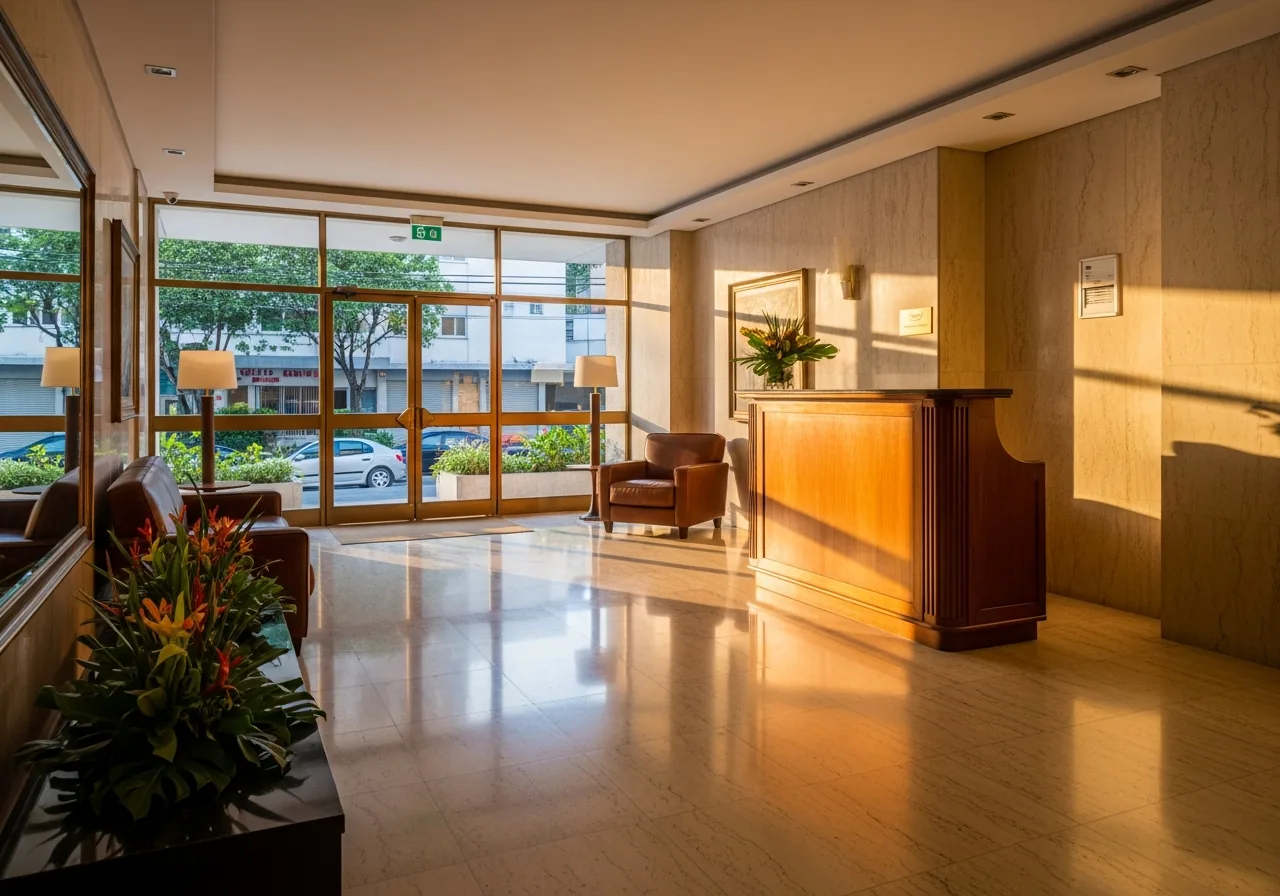
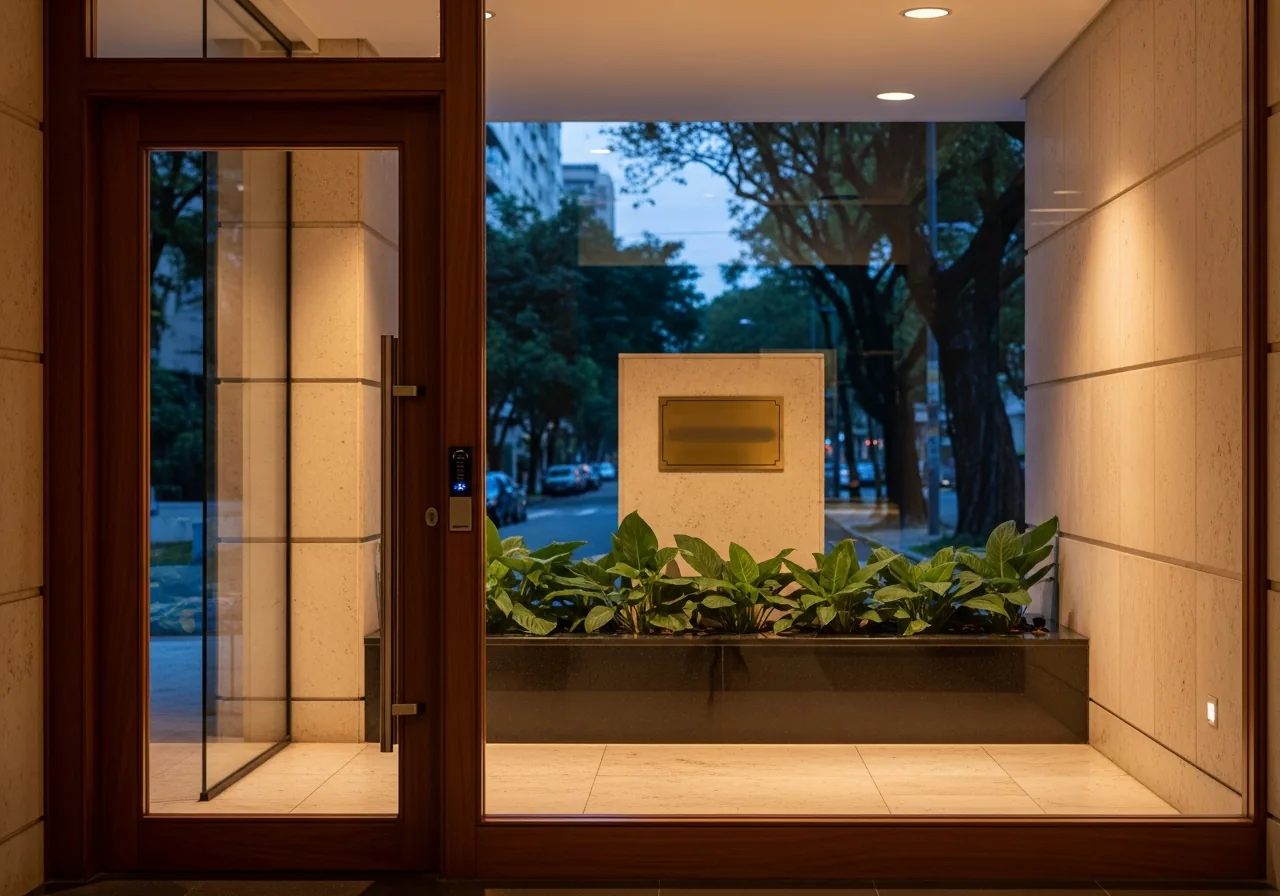
The most under-appreciated single fact about safety in the buyer-relevant slice of Rio is that you do not actually live on the street. You live in a building. The Rio residential building, particularly the South Zone full-service variant our clients buy in, is a small private security operation. The doorman team — typically three to five porteiros working overlapping shifts to provide twenty-four-hour cover — is trained, paid for by the condominium budget, and forms the daily friction layer between you and any opportunistic problem at the street level. The building decides who comes up. It signs deliveries in at the front desk rather than at your apartment door. It logs visitors. It cross-checks the rideshare driver you ordered against the licence plate that arrives. It rings you on the interphone for every entry. It is, in practical effect, the single largest safety investment you make when you buy in Rio, and the quality of it varies meaningfully from building to building in the same neighborhood.
What I look at in a building's security setup
When I walk a client through a building viewing, the security audit is part of the showing whether they ask for it or not. The doorman is at the lobby desk and standing rather than slumped. The CCTV in the lobby covers all entrances and is monitored, not just recorded. The garage entry has either a guarded mantrap or a remote-controlled gate that closes before the next car can enter. The service entrance is staffed during business hours. The interphone system reaches every apartment and is used. The building keeps a visitor log. None of these are exotic; all of them are present in the kind of building I would put a foreign owner into, and the absence of any of them is a meaningful tell about the building's discipline.
What a good doorman team does daily that you do not see
The porteiros in our better buildings know the residents by face by the second week. They know which children belong to which apartment, which dog walker comes for which dog, which delivery service the resident on the fifth floor uses, and which courier is unfamiliar enough to ring up before letting the package in. They know the cars of the regulars. They know the neighbors on the block. They are, on aggregate, a more accurate safety filter than any electronic system the building also runs in parallel. The first month of being a new resident is partly the doorman team learning you; once that has happened, the building becomes meaningfully more secure for you specifically.
The single most reliable security feature of a Rio apartment is not its locks. It is the doorman who has been at the front desk for fifteen years and remembers your face within a fortnight.
04 · Daily habits that actually work
Almost every foreign owner I know who has lived comfortably in Rio for years arrived with a worry that diminished sharply once they understood the small set of habits a competent local applies without thinking. These are the same habits an experienced resident of any large city applies — most of them are not Rio-specific, they are just specific. Here they are, in plain language.
What you wear and what you carry
The beach-and-walk-into-Ipanema lifestyle is real and lovely and is not where foreign owners get into trouble. Where they occasionally do is by combining a visibly expensive watch, a conspicuous handbag and a phone held out at arm's length on a quiet street at the wrong hour. The local heuristic is to dress unostentatiously in transit, leave the watch at home if you are walking somewhere unfamiliar, and treat your phone the way you would treat a wallet in a crowded European city — close to the body, not extended into the world. None of this is "you cannot enjoy your jewellery in Rio." It is "you do not advertise it on a sidewalk." Carioca residents wear their watches at dinner; they do not wear them to the beach.
The phone discipline
The single biggest daily-habit change foreign buyers make once they live here is around the phone. The visible phone in the hand on a quiet street is the most common opportunistic target in the city; the same phone tucked into a pocket and pulled out only inside cafés, in stopped cars and inside buildings is a non-issue. Once that habit is muscle memory — within a couple of weeks for most of our owners — the corresponding worry recedes correspondingly.
The rhythm of the day
Cariocas live earlier in the morning and later at night than many foreign owners initially expect. Beach by seven, errands by ten, lunch slow, work between two and seven, dinner late, life later still. This rhythm has a safety dimension because the city is busier in its safe windows and quieter in its less-safe ones. Sliding your own schedule a little later in the evening and earlier in the morning to match the local rhythm is one of those decisions that improves both the safety picture and the lived experience at the same time — busier streets are safer streets.
Knowing your three blocks
Every long-term resident of Rio knows their three blocks intimately — which café opens at six, which bakery's owner waves, which pharmacy's night-bell works, which doorman of the next-door building also knows them by face. That radius of intimate local knowledge is the most useful safety asset a foreign owner builds, and it is built simply by living in the same neighborhood for the first few months without rushing to leave it. The owners who feel comfortable here longest are the ones who put down a small local pattern before they widen out.
05 · Going out after dark
Rio at night is one of the great cities in the world for it, and the question is not whether to go out but how. The lived rule is roughly this. The South Zone residential corridor — Ipanema, Leblon, parts of Copacabana, Lagoa, Jardim Botânico — runs essentially safe for foot traffic late into the evening on busy streets, with the caveat that empty quiet residential streets at the back of those neighborhoods after about midnight are quieter than they are unsafe, but are quiet enough that an experienced resident takes a ride-share for the four blocks rather than walking them. Centro and Lapa, both worth visiting for nightlife, are not residential and not corridors you walk from at the end of the night — you arrive by car and leave by car, like an experienced resident of any large city navigating a nightlife district.
Restaurants, bars and the predictable pattern
Almost all the restaurants and bars in our restaurants guide are in the safe corridor, almost all of them have valet parking or are an easy ride-share, and almost all of them know how to phone a car for you at the end of the meal. Saying "can you call me a car" to your waiter is normal Carioca behavior, not a flag of foreign nervousness. Doing so is one of the small habits that converts the going-out experience from a vague anxiety into a completely routine evening.
06 · Driving, taxis and ride-share
Foreign owners ask whether they should rent or buy a car. The honest answer for almost everyone in our slice of Rio is no, or not initially. Ride-share — Uber and 99 are both reliable, well-priced, and the way an experienced Carioca actually moves — handles most daily transport better and more safely than driving yourself in unfamiliar traffic. A car becomes interesting once an owner is here long enough to know the city well, has a building with secure garage parking and is doing weekend trips out to Búzios or Petrópolis often enough to justify it. For the first six months, ride-share covers everything.
The ride-share discipline
Order from inside the building or inside a café, not from the sidewalk. Match the licence plate before getting in — the doorman will do this for you on the way out, which is one of the practical reasons a good lobby team matters. Sit in the back. Do not hand the phone to a driver to enter an address; speak it or type it yourself. None of this is paranoid; it is what an attentive local resident does without thinking.
Airport transfers
The first arrival and the last departure are the two transport moments where foreign owners most often get extracted at the wrong rate or routed unproductively, and they are also the easy ones to solve. Have your manager pre-book a known driver from Galeão (GIG) to your building for the first arrival; ride-share is fine after that. The first-night driver is usually the single biggest morale lift of the trip — luggage handled, building reached, doorman greeting both of you by name by the second visit.
07 · Cash, cards and the airport
The financial-safety side of daily life is genuinely simpler than the reputation suggests. Card acceptance is essentially universal in our slice of the city, contactless is standard, and Pix — the Brazilian instant-payment system — has effectively replaced cash for almost every routine transaction. The only places you actually need physical cash are the occasional small bakery, certain beach kiosks and tipping. R$ 200 in small notes in the apartment safe is more than most foreign residents need in a normal week.
Card-skimming has dropped sharply across the last several years as chip-and-PIN, contactless and Pix have crowded out the older swipe-card infrastructure, and the venues our owners frequent are all on modern terminals. The remaining ATM caution is sensible: use ATMs inside bank branches, shopping centres or hotel lobbies rather than free-standing ones on the street, and the same anyway-do-not-show-money discipline that applies in any large city.
A note on the doorman as social safety net
One last small but consequential point about residential security that does not fit neatly into any of the sections above. The Rio doorman is not only a physical-security layer; he is a social-safety net. He is the person who notices that a regular resident has not come home by an unusual hour and rings their family. He is the person who lets a visiting daughter in even when the visiting daughter has forgotten the apartment number, after verifying her credentials. He is the person who knows which neighbor would lend the spare key when yours is locked inside the apartment. He is, in plain language, a part of how a neighborhood looks after itself in a city where the public-services density is genuinely thinner than in equivalent European cities. Foreign owners who treat the doorman team as staff to be tipped at Christmas and otherwise ignored under-use the asset. Foreign owners who treat them as neighbors who happen to work in the building extract a meaningfully better experience, both in terms of practical security and in terms of how rooted in the building they feel as residents.
08 · Three real scenarios from our owners
Composites from owners on our book, sanitised and rounded, but the situations are accurate. These are what living here actually looks like.
The London couple, second-floor Ipanema, two young children
Bought a three-bedroom one block back from Vieira Souto, raised two young children here from school-age through their early teens, never had a security incident worth mentioning. They walk to school, walk to the beach, walk to dinner in their immediate corridor on busy streets, take ride-share for anything further. The mother says her single biggest worry on arrival — children in Rio — was the worry that diminished fastest once they were living in the building. They are now committed long-term residents.
The retired American executive, Lagoa, solo resident
Bought a two-bedroom on Avenida Epitácio Pessoa, lives there seven months a year, walks the Lagoa loop in the early morning, takes ride-share to dinner, has built a small local circle in his first year and now waves at half a dozen neighbors on a normal walk. He has had one phone-snatch attempt in three years, on a deserted residential street at one in the morning after a late dinner; he was not hurt and the phone was recovered the same day. His own summary afterwards, which I will paraphrase, was that the experience was unpleasant but in retrospect predictable from where and when he was walking, and that the habits the rest of us apply by default — ride-share rather than walking that segment late — would have prevented it. He has not modified anything else about his life.
The young Brazilian-American family, Joá villa
Bought the cliffside villa for the gated, controlled-access nature of Joá specifically because they wanted the most insulated daily security picture available in greater Rio. They drive everywhere; the children swim every day; the staff is screened and long-tenured; the property has its own electronic perimeter. Their lived security experience is comparable to a high-end residential community in California. They are also further from urban texture than the Ipanema buyer is, which is the trade they wanted.
09 · Calibrating your worry against the data
I will say something here that brokers do not usually say out loud, because the safety conversation is uncomfortable to be precise about. The lived experience of safety in the buyer-relevant slice of Rio is meaningfully better than the international headlines suggest, and meaningfully worse than the local tourism agency wants you to believe. The honest middle is something like this. Almost no foreign owner I have helped over the last decade-plus has had a serious safety incident affecting them personally. A meaningful minority have had a phone-snatch or a similar opportunistic moment, almost always on a quiet street at a quiet hour, almost always involving phone-out behavior that local residents have unlearned. None of the buildings I sell into have had a residential intrusion in the time I have been here. The actuarial picture for a foreign resident living within the residential corridor, observing the daily habits in this guide, is not perfect — no city's is — but it is meaningfully better than the worry most buyers arrive with.
The framework I would offer a buyer is this. If your safety worry is high, that is a useful signal that you should be deliberate about the neighborhood and the building you buy into, deliberate about the habits you adopt, and patient with the first few months of learning the local rhythm. If your safety worry is low, that is a useful signal that you should not be complacent — the small habits matter precisely because the underlying conditions reward them. Either calibration converges on the same practical answer: choose the building well, learn the local rhythm, apply the daily habits, build a small radius of local knowledge, and let Rio be the city it actually is for residents rather than the city the international news describes.
10 · The bottom line
I have lived in Rio for years and raised children here. I would not have written this guide the way I have written it if I did not believe a foreign owner could live well and safely in the apartments we sell. The honest version of the story is that it is a city with real challenges that an attentive resident learns to navigate within months, and that the residential corridor where our clients buy is, for daily life, more comparable to upscale European cities than the international press allows. The work of feeling at home here is real but it is also finite. Once it is done, you do not think about it again.
If safety is a serious concern for you — and there is no reason it should not be — the productive next step is not a search engine. It is a conversation. Tell me what specifically worries you, where you are coming from, what your family configuration is, and what your daily pattern would look like in the apartment you are considering. I will tell you honestly whether the building, the street and the lifestyle you are picturing match the way Rio actually operates, and where the specific calibration would need to be. The conversation costs nothing. The cost of arriving here surprised is meaningfully higher.
None of this is meant to dismiss the worry. The worry is reasonable, the news is real, and the version of Rio that troubles you exists. The point of this guide is simply that the version of Rio our owners live in is also real, is the version you would be buying into, and is the one almost nobody outside the city writes about. If you would like to see it firsthand before deciding, that visit is one I would rather arrange for you than have you arrange yourself — we can build the schedule around the neighborhoods, the buildings and the times of day you would actually live, rather than around a tourist circuit that proves nothing about what residency here is like. Start the conversation here.