
There is no part of a foreign-buyer conversation that produces more anxiety per minute of discussion than the tax conversation. The anxiety is not because Brazilian taxation of foreign owners is unusually heavy — it is not — but because the structure of it is unfamiliar, the language is genuinely impenetrable in places, and almost every foreign buyer arrives with at least one piece of misinformation, often picked up from somebody else's accountant in a different country. I have sat through that conversation a couple of hundred times now, and the moment a buyer sees the full set of lines on a single page, the anxiety drops sharply. This is that page. It is the honest, complete-but-readable inventory of every tax a non-resident foreign owner of a Rio apartment will encounter — at purchase, during ownership, on rental income, on sale, and back home — together with the rates, the filing windows and the structural choices that actually move the bill.
00 · Read this first
Two things to set the scene. First, I am not your accountant. Brazilian tax law is updated frequently and the interactions with your home country are personal. Treat this guide as the structure of the conversation you should be having with a Brazilian-qualified contador and your home-country tax advisor, not as a substitute for either. Everything below is current to mid-2026 to the best of our knowledge and we will update it when something material moves. The figures are indicative middles of normal ranges, not promises.
Second, the right mental frame for this whole topic is not how do I avoid Brazilian tax. The frame is how do I file cleanly so that the rental income is freely repatriable, the eventual sale proceeds clear without friction, and the home-country credit for taxes paid in Brazil is properly claimed. Clean compliance is cheap. Dirty compliance is occasionally fatal — not because the Brazilian authority is punitive, but because cleaning up a years-old filing problem at the moment you want to sell and repatriate three or four million dollars is the worst time to be discovering it. I have watched two foreign owners learn that lesson the expensive way. Everything in this guide is written to keep you out of their company.
The Brazilian Central Bank registration of your inbound foreign capital — a process called SISBACEN — is automatic at any competent Brazilian bank if you go through it correctly at purchase. That registration is the document that allows every subsequent rent repatriation and the eventual sale proceeds to convert and leave the country cleanly. If you remember nothing else from this guide, remember to get that contract number in writing from your bank, keep it with the deed, and never lose it.
01 · Taxes at the moment of purchase
The closing is where the largest single tax bite arrives, and it arrives all at once. There is one main tax, plus several supporting lines that often get rolled into a single "closing cost" figure but that are genuinely separate things worth pulling apart.
ITBI — the municipal transfer tax
The Imposto sobre a Transmissão de Bens Imóveis is a municipal tax on the transfer of real property, and in the city of Rio de Janeiro it currently runs at 3% of the higher of the agreed sale price or the municipal assessed value. Some municipalities have a sliding rate or thresholds; Rio's is a flat percentage on the relevant value. The tax is the buyer's responsibility, paid before the deed signing, and the receipt is one of the documents the notary requires before issuing the escritura. There is no realistic path to reducing this number meaningfully — it is what it is, it is paid once, and it is non-negotiable.
Notary and registry fees
The notary (cartório de notas) charges to draft and issue the deed; the registry (cartório de registro de imóveis) charges to record it. Together these are not taxes in the strict sense but state-regulated public-service fees, and they vary by transaction value on a published scale. For a normal South Zone apartment expect 1% to 1.5% of value combined. Both fees are buyer-side. The receipts are public-record documents and a competent attorney will reconcile them line by line on the closing statement.
Stamp duty equivalents
There is no separate national stamp duty on residential real estate of the sort the United Kingdom levies. The municipal ITBI does the work that stamp duty does in other jurisdictions. Buyers arriving from London or Lisbon sometimes look for a second instrument and there is not one.

02 · Taxes during ownership
Once the apartment is yours, there is exactly one annual property tax and a small constellation of recurring fees that get treated like taxes in casual conversation but are technically not.
IPTU — the annual municipal property tax
The Imposto Predial e Territorial Urbano is Rio's annual municipal property tax, billed by the Prefeitura, levied on the property's assessed value. For prime South Zone residential the IPTU runs roughly 0.6% to 1.2% of the assessed value per year. The assessed value (valor venal) is set by the city and is generally below market price, which softens the headline rate. The bill arrives early in the calendar year and can be paid in a single discounted payment or in monthly instalments. As a non-resident owner you can pay online with a Brazilian bank account or instruct your manager to handle it. Falling behind on IPTU is one of the few things that genuinely creates problems at sale, because the certidão of paid IPTU is one of the closing documents the buyer's attorney requires.
Condominium fee
The monthly condomínio is the building's operating budget split among its units — staff, lifts, pool, garage, gardens, security — and is not a tax in any meaningful sense, but I include it here because it is the largest fixed recurring cost of ownership and foreign buyers consistently under-model it. South Zone full-service buildings run R$ 4 to R$ 12 per square metre per month. The condominium can vote in extraordinary assessments for major works — façade, lifts, sinking-fund top-ups — and those flow through to owners proportionately. Read the last two years of assembleia minutes before you buy and you will know exactly which side of the range you are on.
Foro and laudêmio on terrenos de marinha
If your apartment sits on terrenos de marinha — historically navy-administered foreshore land, common in parts of São Conrado and Niterói and a handful of other addresses — there is an additional annual federal occupation fee (foro) of about 0.6% of assessed value, and a one-off transfer charge (laudêmio) of 5% on resale. Most South Zone prime is not on marinha land. If yours is, your attorney will flag it during due diligence and the seller usually adjusts the price for the laudêmio at closing.
03 · Taxes on rental income
This is the section foreign owners ask about most, and the section where the regime is, somewhat counter-intuitively, the cleanest of the lot. Brazilian taxation of non-resident rental income is a flat percentage, filed monthly, with no income brackets and no progressive rates.
The non-resident withholding regime — a flat 15%, monthly
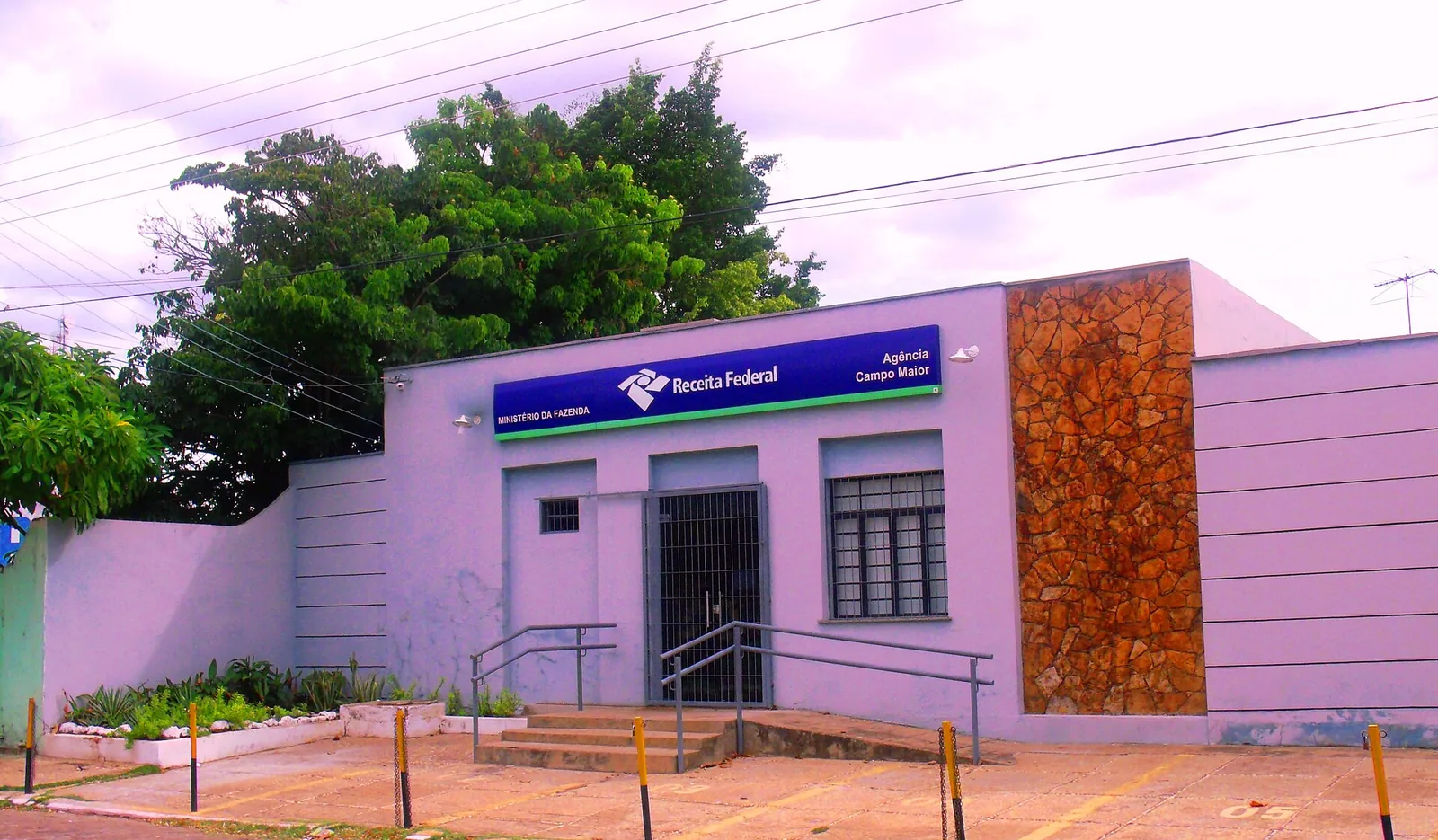
Non-resident foreign owners of Brazilian residential property pay rental-income tax under the non-resident withholding regime — a flat 15% on the rental income, remitted monthly via DARF, due the last business day of the month following the month the rent was collected. (The Carnê-Leão, which you may see mentioned elsewhere, is the regime for Brazilian tax residents, with progressive rates to 27.5% — it does not apply to you while you remain non-resident.) Your manager remits this on your behalf or provisions for it transparently on the monthly statement and remits it directly to the Receita Federal — either is fine, and a good manager will tell you upfront which approach they use.
What is deductible
Some documented costs directly tied to producing the rental income can be deducted from the gross before the 15% applies — but the list is narrower than owners expect. In practice the safely deductible set is IPTU, the condominium fee, and collection/administration costs. Anything beyond that — platform commissions, cleaning, utilities, minor maintenance — confirm with your contador before netting it. Whatever is deducted must be invoiced (with proper nota fiscal) and matched to the rental period. Keep the invoices. Your manager should be assembling a monthly file you can hand to your accountant at year-end without thinking about it; if they cannot, that is a finding about the manager, not the tax.
The DIRPF question
Non-residents do not file the resident annual return (DIRPF). The flat 15% withholding is final — remitted monthly, and there is nothing further to reconcile at year-end on the Brazilian side. The DIRPF only enters the picture if you become a Brazilian tax resident, at which point the resident regime (including the annual return, due in April for the prior calendar year) applies to your worldwide income. As always, confirm your specific position with your contador — a competent one handles the monthly filings for a small fixed fee, typically R$ 1,200 to R$ 2,500 a year for a single-property owner.
What is not subject to the 15%
Use of the apartment by the owner personally is not a rental and is not taxed. Income from a sale is capital gains, not rental income, and is treated under a different regime (next section). Reimbursement of a guest's incidentals — a cleaning fee, a damage deposit returned — is not income and is not taxed.
Treat the 15% as a fixed cost of doing business, file it monthly, claim the credit at home where the treaty allows, and move on. The fear of Brazilian rental tax is almost always larger than the bill.
04 · Taxes when you sell
Selling produces the second-largest single tax event of the whole ownership cycle, and it is the one foreign owners model worst. The mechanics are not complicated; they are just unfamiliar.
Capital-gains tax in Brazil
Capital gains on the sale of Brazilian residential property by a non-resident are taxed under a progressive federal regime that starts at 15% on the first R$ 5 million of gain, then steps to 17.5%, 20% and 22.5% in higher gain brackets. The gain is measured in reais on the difference between sale price and your registered acquisition cost — itself denominated in reais. Documented improvement costs to the property, properly invoiced, can be added to the acquisition cost basis and reduce the gain. The tax is filed within 30 days of the sale via a specific form (GCAP) and paid before the proceeds can be remitted abroad. Your contador handles this; budget about a week between the closing and the conversion-and-remittance to allow it to be filed and the receipt obtained.
The currency wrinkle worth understanding
The single most counter-intuitive thing about Brazilian capital gains is that the gain is calculated in reais, not in your home currency. This means that an apartment bought ten years ago for two million reais and sold for four million reais shows a two-million-real capital gain in Brazil even if, measured in dollars, you broke even because the real weakened. You pay tax on the local-currency gain regardless of what the rate did. Conversely, an apartment whose dollar-translated value rose meaningfully while the local-currency price stayed flat shows no Brazilian capital gain, even though you, in dollars, made money. This is the structural feature most foreign buyers miss when they model their exit, and it is sometimes a friend and sometimes an enemy.
The exemptions that exist
There are two narrow exemptions in Brazilian law that foreign owners should know about even though they rarely apply. First, gains up to R$ 35,000 on the sale of residential property below R$ 440,000 in value are exempt — a threshold designed for low-value properties that does not touch our market. Second, residents (not non-residents) selling their primary residence and reinvesting the proceeds into another Brazilian residential property within 180 days can defer the gain — again, this does not generally help non-residents. If your structure ever changes such that you become a Brazilian tax resident, that exemption becomes potentially relevant; coordinate with your contador.

05 · What your home country also wants
Brazilian tax is half of the picture. Your home country generally taxes its residents on worldwide income, including Brazilian rental and Brazilian capital gains. The relevant question is whether your country has a tax treaty with Brazil that allows a credit for the Brazilian tax already paid against the equivalent home-country liability. A few important notes by home country.
United States
The United States and Brazil do not have a comprehensive tax treaty. US-resident owners report Brazilian rental income and capital gains on their US returns and are generally allowed a foreign tax credit for the Brazilian tax paid under IRC §901, subject to the usual baskets and limitations. The mechanics are workable but require a US accountant familiar with Brazilian-source income; not every accountant has done one. Foreign-asset reporting (FBAR and Form 8938) applies to the Brazilian bank account; the apartment itself is not a reportable financial asset.
United Kingdom
The UK signed a comprehensive tax treaty with Brazil in 2022, but it is still working through ratification on the Brazilian side and is not yet in force. In the meantime, UK-resident owners generally rely on the UK's unilateral foreign-tax-credit relief for the Brazilian tax paid — the mechanics are workable, but confirm the current position with your UK advisor. Brazilian rental income goes on the foreign pages of the self-assessment.
Portugal, Italy, France, Spain
All four have tax treaties with Brazil. The credit mechanics work in each case. Portugal's non-habitual-resident regime, where it still applies, may reduce or exempt the Portuguese-side tax on foreign-source rental income; verify with Portuguese counsel as the regime has been reformed.
The non-treaty pattern
Owners from non-treaty jurisdictions can usually still claim a domestic foreign-tax credit unilaterally under their own law, but the mechanics vary. This is the conversation to have with your home-country tax advisor before you sign the purchase contract, not after the first rental quarter.
06 · The CPF, the CNPJ and the structure question
One of the early decisions foreign buyers face is whether to hold the apartment in their personal name (with a CPF) or in a Brazilian holding company (with a CNPJ). For the vast majority of foreign owners on our book, personal name is the right answer. Here is the honest comparison.
Personal name (CPF) — the default
Held in your personal name, the apartment is taxed under the regimes described above: 15% flat on rental, progressive capital gains on sale, IPTU annually, ITBI at purchase. There is no annual corporate filing, no accountant retainer beyond the modest tax-return fee, and the structure is transparent to your home-country tax authority in a way most treaty mechanics expect. Estate planning runs through Brazilian inheritance law, which is generally workable but is a conversation to have with your home-country estate lawyer.
Brazilian holding (CNPJ)
Held in a Brazilian LTDA structured as a real-estate holding, the apartment is taxed at corporate rates on rental income — typically the Lucro Presumido regime, which on rental income lands at an effective rate of roughly 11% to 14% all-in, marginally lower than the 15% individual rate. The structure has higher fixed costs (formation, annual accounting, monthly bookkeeping) that typically run R$ 8,000 to R$ 15,000 a year. The tax advantage starts to make sense above roughly three or four properties or above rental incomes meaningfully above R$ 250,000 a year, and rarely on a single apartment. The corporate structure also complicates eventual personal use of the apartment (it is the company's property, not yours) and adds friction to a sale.
Offshore structures
Some foreign buyers ask about offshore (Cayman, BVI, Delaware) holding structures for Brazilian property. The honest answer is that Brazilian tax law treats the rental income and capital gain as Brazilian-source regardless of the holder's jurisdiction, and an offshore wrapper rarely buys meaningful tax savings on the Brazilian side. Where it does help is sometimes on home-country estate planning, and that is a conversation for an estate lawyer in your jurisdiction. For Brazilian tax purposes the structure is a wash for most personal-use buyers.
07 · The annual filing calendar
The single mental model that keeps foreign owners out of trouble is the annual calendar. Here is the year, as your contador sees it.
- Every month15% non-resident withholding on the prior month's rental income, remitted via DARF, due the last business day of the current month. Your manager either remits or provisions transparently.
- JanuaryIPTU bill arrives. Pay in a single discounted instalment or set up the monthly schedule with your bank.
- March – AprilNothing to file as a non-resident — the monthly 15% withholding is final. (The DIRPF annual return only applies once you become a Brazilian tax resident.) Reconcile the manager's statements with your contador.
- Mid-yearMid-year review with your contador to confirm withholding and rate elections are still right for the year — useful if you've added a property or changed managers.
- Year-endReconcile the manager's annual statement against your accountant's records. Coordinate with your home-country tax advisor on credit claims.
- Within 30 days of a saleGCAP capital-gains filing, payment of CGT, receipt obtained before remittance of proceeds abroad.
08 · Four mistakes that destroy clean compliance
The owners I have watched have problems all had at least one of these. Avoiding them is not exotic — it is just discipline, applied month by month rather than panicked into at year-end.
1. Skipping the SISBACEN registration
The single most expensive mistake a foreign buyer can make in this whole topic is to bring purchase money into Brazil through an irregular channel — a friend's account, a third-party wire, an unregistered conversion — and end up without a clean Central Bank record of the inbound capital. Years later, when you try to remit the sale proceeds abroad, the conversion can be contested or delayed and unwinding it is a project. Use a competent Brazilian bank, get the contract number in writing, and keep it.
2. Letting the monthly withholding lapse
The 15% non-resident rental tax is small, and partly because it is small, foreign owners sometimes forget to file it monthly. Missed filings produce automatic fines, interest accrues, and the cleanup at sale is annoying. A manager who handles this for you should be able to show you the monthly DARF receipts on request. If they cannot, change managers.
3. Not keeping improvement-cost receipts
Documented improvement costs add to your acquisition basis and reduce the eventual capital gain. Foreign owners who renovate without keeping properly invoiced notas fiscais lose this deduction at sale. Every renovation in Brazil should be invoiced through the building or your manager so the paper trail is there a decade later. Even a small renovation invoiced properly can be worth tens of thousands of dollars at sale.
4. Pretending the home country is not also looking
Your home country generally taxes worldwide income, and the credit for Brazilian tax only works if you actually claim it on the home-country return. Owners who file Brazilian tax cleanly but never tell their home accountant about the Brazilian apartment forfeit the credit and double-tax themselves. A single email from your contador to your home accountant once a year keeps the picture honest at both ends.

The 183-day trip-wire foreign owners stub their toe on
One nuance worth flagging because it catches owners by surprise. Brazilian tax residency is determined by physical presence and intent. Spending more than 183 days in Brazil within any twelve-month rolling window, or arriving on a visa that confers permanent residency from day one, both trigger Brazilian tax residency. A tax resident is taxed on worldwide income — not just Brazilian-source income — at progressive Brazilian rates. For foreign owners who treat the apartment as a vacation home and visit for a couple of months a year, this is a non-issue. For owners who fall in love with Rio, take a longer sabbatical or pull the trigger on the VIPER residency without thinking through the home-country implications, the residency switch can produce a sharply larger overall tax bill in the year it triggers. If you are anywhere near the 183-day line, plan the calendar deliberately and coordinate with both tax advisors before the year ends, not after.
09 · The bottom line
For a non-resident foreign owner of a single Rio apartment, the all-in tax burden, properly modelled, is meaningfully lighter than the equivalent burden in most comparable foreign-buyer markets. At purchase you pay roughly 3% in transfer tax and 1% to 1.5% in notary and registry. During ownership you pay 0.6% to 1.2% in IPTU annually. On rental income you pay 15% flat. On sale you pay 15% to 22.5% in capital gains on the BRL gain. Add it up across a normal ten-year hold and the total Brazilian tax load on a managed prime apartment runs roughly 18% to 22% of the cumulative rental and sale value combined — competitive with Portugal, materially lighter than the US once estate-tax wrapper costs are included, and structurally simpler than either.
The mental model that has served my owners best across the years is this. Treat the 15% on rent as a fixed cost of doing business, file it monthly, claim the credit at home where the treaty allows. Keep the SISBACEN contract number and the IPTU receipts in one folder. Run improvements through invoiced contractors so the basis-step-up is there at sale. Hire a competent contador in Rio and a competent accountant at home, and make them email each other once a year. Do those four things and Brazilian tax becomes a row in your spreadsheet, not a topic of anxiety. Done badly — without SISBACEN, with missed monthlies, without receipts, without coordinated home filings — it is genuinely capable of swallowing twenty per cent of your decade IRR. The difference between the two outcomes is roughly two hours a quarter of administrative attention. That is the entire game.
A last word on cost. The total annual administrative load for a single-property foreign owner — Brazilian contador, monthly withholding remittances, IPTU reconciliation — runs roughly R$ 2,500 to R$ 4,500 a year all in. At current rates that is somewhere between five hundred and nine hundred dollars annually for the entire Brazilian-side tax function. Compared to the equivalent administrative cost in Miami, where a non-resident structure plus annual filings can run three to five times that, Brazil is genuinely inexpensive to be compliant in. The work is small. The discipline is the whole point. Hire the contador in your first month, set up the manager to send monthly statements directly to the contador, and you will never think about Brazilian tax administration again unless a structural rule changes, in which case the contador will tell you to.
If this guide has done its job, the conversation with your accountant on the day you sign your offer is going to be shorter and clearer than it would otherwise have been. If it has not, send me the question that is still unresolved and I will come back to you with the specific answer for your specific situation — and where I am out of my depth, I will tell you that and put you on the phone with the Brazilian contador we use for our own family. Start the conversation here.