
Almost every foreign buyer who closes on a Rio apartment in our book renovates within the first eighteen months. The reasons are predictable. South Zone prime stock is largely 1960s to 1980s construction, which means generous proportions, original parquet floors and beautiful old bones, but also original kitchens and bathrooms and electrical systems that need real work. Foreign owners arrive with money, taste and standards, and the first conversation after the deed is signed is almost always about what to do with the apartment. This guide is the long version of that conversation — what the renovation actually involves in Rio, who you need on the team, what it costs per square metre, how long it really takes, and how to run it without losing your mind from a continent away. It is written for the foreign owner who wants a beautifully finished apartment they can live in and let out at hotel standard, and who would rather hear the unvarnished version before they sign the construction contract than after.
01 · Why this guide exists
I have walked roughly thirty foreign-owner renovations from the closing dinner through the final delivery, and I have learned that the part of the process that foreign owners are most prepared for — finding a contractor and signing a budget — is the part that goes wrong least. The part they are least prepared for is everything else: the building's pre-approval rules, the work-hour restrictions, the noisy-work schedule on each floor, the per-unit licensing the city requires for any structural change, the way local contractors actually quote, the way payment milestones actually work, the rhythm of three holiday windows that effectively stop work, and the question of who, exactly, is on site every Wednesday morning making sure the tilework looks like the tilework in the moodboard. None of these are exotic; all of them are different from how this would run in London or New York; and all of them can be navigated cleanly with a competent local team and the right expectations going in.
The single most important orientation I can give a foreign owner before they renovate is this. The Rio renovation is not a project you procure once and then receive on a date. It is a relationship you run continuously for three to nine months, with humans, mostly in person but bridgeable remotely if the team is set up for it. The owners who treat it as a procurement and then disappear to their home country tend to be unhappy with what they receive. The owners who treat it as an ongoing relationship with a team they have actually built tend to be delighted. The difference is not money. The difference is attention. This guide is about how to direct that attention efficiently from a distance.
02 · The building's rules come before the architect
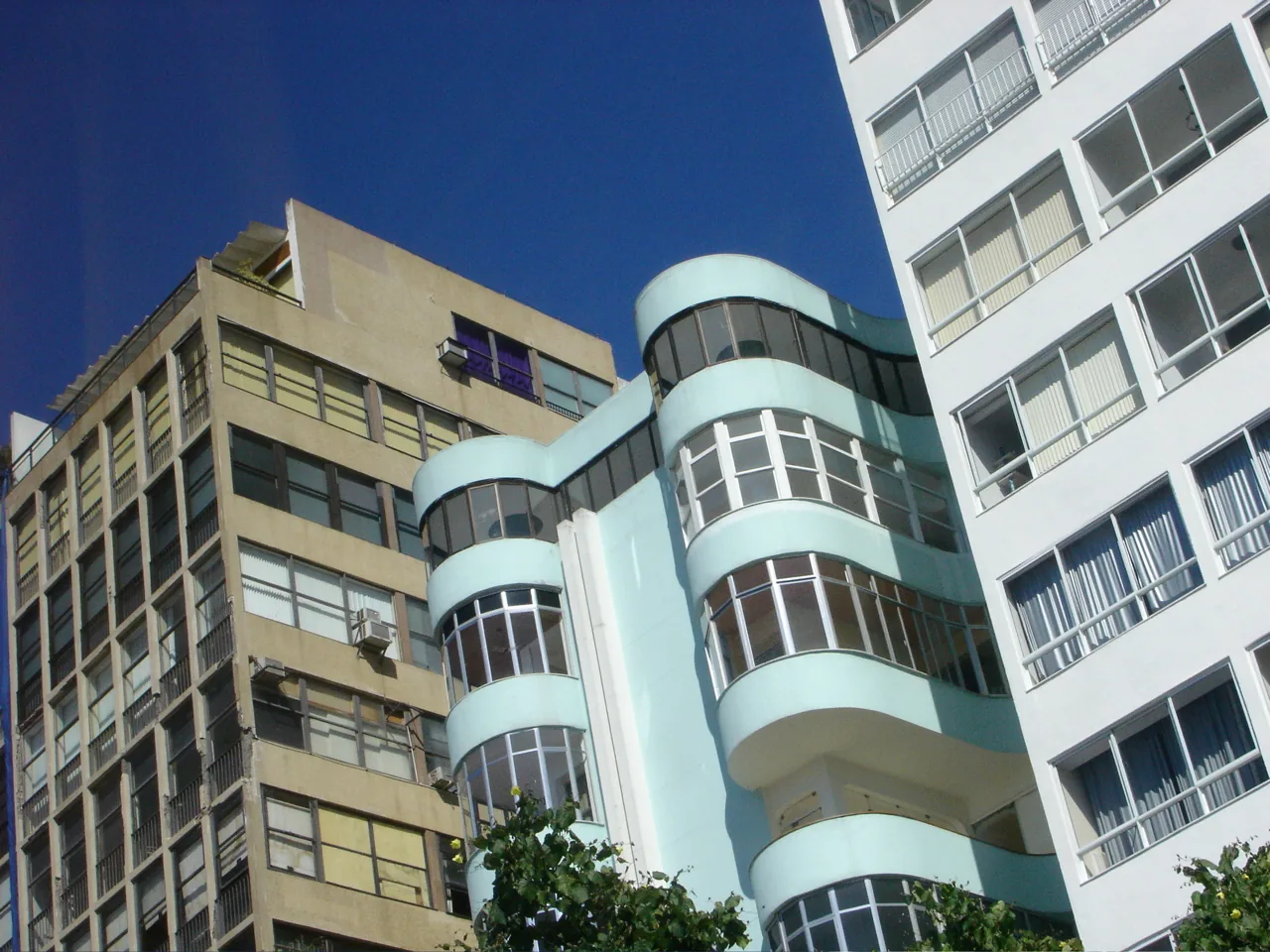
Before the first architectural sketch, before the first contractor quote, before any of the visible work of designing the apartment begins, the building has a say. Every well-run South Zone building has a renovation regulation that owners must comply with, and the regulation typically covers all of the following: which months the building permits major construction work (often only outside Rio's peak season, which can mean a hard window of March through October at the strictest buildings); which days and hours of the week noisy work is permitted (typically weekdays only, usually 8am to 5pm, never weekends, never holidays); the required pre-approval of structural-impact drawings by the building's own engineer at the owner's expense; the deposit required against damage to common areas (typically R$ 5,000 to R$ 20,000); and the rules around debris removal, which must be coordinated through the service entrance and the freight lift on a published schedule.
None of this is optional. The building's rules are enforced by the doorman team, by the síndico (the elected resident manager), and by the building's engineer on inspection. A foreign owner who hires a contractor without first reading the building's renovation regulation tends to discover the rules on the first morning of demolition when the doorman politely refuses to allow the dumpster to be loaded through the social entrance. The right order is the opposite: read the regulation in week one, share it with your architect and your contractor in week two, build the schedule around it. Everything downstream is easier when this comes first.
What the city also requires
Beyond the building's own rules, the municipality of Rio (Prefeitura) requires permits for structural alterations — moving load-bearing walls, altering plumbing layouts that pierce party walls, anything that touches the building's external facade. Non-structural cosmetic renovation (kitchen replacement within the same layout, bathroom replacement within the same layout, floor refinishing, electrical updates within the apartment) typically does not require a city permit. Knowing which side of that line your scope sits is a conversation your architect has with the building's engineer before the contract is signed; a poorly scoped project that crosses the structural line without permits is a sale-blocker years later when due diligence catches it.
The neighbour relationship
A Rio renovation makes meaningful noise for the eight-to-twelve weeks of demolition and heavy carpentry, and the relationship with the immediate neighbours is the part foreign owners under-invest in. A small written note from the owner introducing themselves, an outline of the work and the schedule, dropped under each adjacent door before the work starts, and an actual bottle of wine to the apartment directly below — none of this is bribery; it is the local equivalent of acknowledging that the neighbours are paying a real attention cost for your project. Done well, it converts an adversarial setup into a neutral one. Skipped, it sometimes leads to a formal complaint to the síndico that meaningfully complicates the rest of the schedule.
03 · Three scopes of renovation
Almost every foreign-owner renovation lands at one of three scope levels, and the cost per square metre and the timeline both follow from the scope. I have run all three repeatedly. Here is the honest decomposition.
Light — the refresh
Repaint throughout, refinish original parquet floors, replace kitchen cabinet fronts and countertops without moving plumbing, refresh bathroom tile and fixtures within the existing layout, update lighting and switchplates, change interior doors. No structural work, no permits, no layout changes. This is the lightest scope that meaningfully transforms an apartment, and it is what I recommend for owners whose primary objective is to make the apartment beautiful and rental-ready without re-engineering it.
Mid — the kitchen and bathrooms
Everything in the refresh, plus full demolition and rebuild of the kitchen and bathrooms within their existing footprints, replacement of all plumbing runs within those rooms, rewiring of those rooms to modern standards, replacement of the apartment's electrical panel if it needs it. The footprint stays the same; the inside of the kitchen and bathrooms is new. This is the most common scope for the foreign-buyer renovation, because the South Zone stock typically has lovely living spaces and dated wet rooms, and the mid scope is exactly the surgery the apartment needs.
Full — the gut
Down to the slab and back up. New floor plan, new kitchen location, new bathroom layouts, new electrical, new plumbing throughout, new air conditioning system, new floors. The full gut is the appropriate scope for an apartment that has good bones but a bad layout, or for an owner who wants to combine two adjoining units, or for an owner whose taste is meaningfully different from what the previous owner left behind. It is the longest and most expensive scope and it produces the biggest visual transformation.
04 · Realistic budgets per square metre
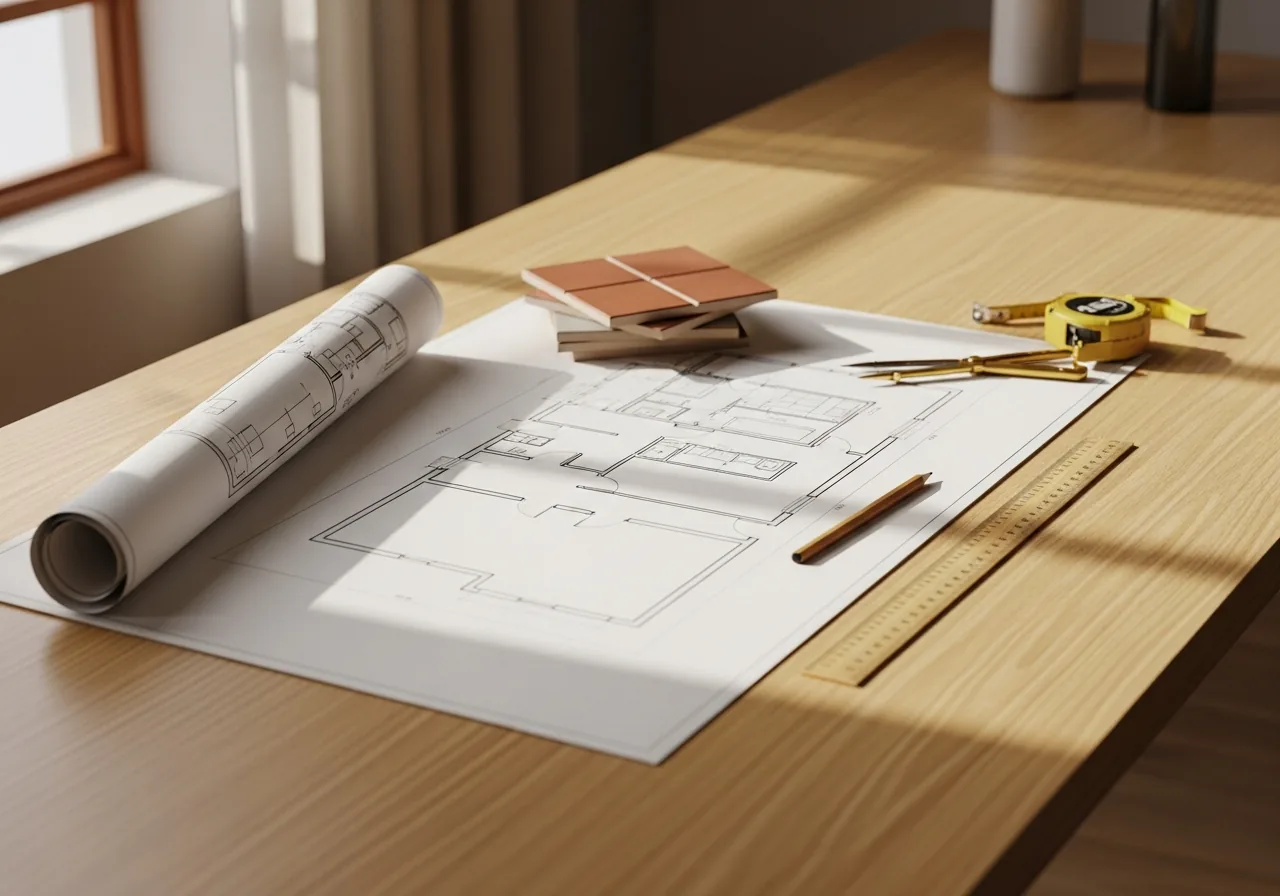
Budgets in Rio are typically quoted in reais per square metre of apartment area, and they cover hard construction costs only — labour and materials. Architect fees, project management, taxes on materials and the building's deposits are separate. These are honest middle figures from projects I have actually overseen across the last three years, with the caveat that the high end of each range is a possibility, not the default.
To put those figures into the dollars foreign owners think in, a one-hundred-and-twenty-square-metre Ipanema two-bedroom renovated to the mid scope sits at roughly US$ 110,000 to US$ 180,000 in hard construction costs at current rates, plus architect fees and any furnishing. A full gut on the same apartment runs US$ 220,000 to US$ 340,000 on the same basis. Those numbers are meaningfully lower than the equivalent renovation would cost in Miami, Lisbon or New York — labour costs in Brazil are structurally lower, materials are competitive when sourced locally, and the contractor margins are slimmer because the market is competitive. This is one of the genuine advantages of Rio prime: the renovation maths is more forgiving than equivalent foreign-buyer markets.
Where the budget actually goes
A useful breakdown for a mid-scope project on a typical two-bedroom: roughly 25% labour, 30% materials and finishes, 15% plumbing and electrical, 15% kitchen cabinetry and appliances, 10% painting and finishing, 5% disposal and incidentals. The two lines that vary most by buyer taste are kitchen cabinetry (where imported European brands triple the line item) and tile and stone (where a few luxury slabs from local quarries can substantially change the budget). The line that varies least is labour, which is reasonably standardised across decent contractors.
05 · The schedule Rio actually keeps
The schedule is the single most misjudged input on a foreign-owner renovation. The honest middle, on a normal mid-scope project, is four to six months from contract signing to handover. Light refresh runs eight to twelve weeks. Full gut runs eight to twelve months. Those are normal numbers in normal conditions, on a project run by a contractor who has done several of them before for owners with similar standards.
The three holiday windows
Three windows in the year effectively pause work even if the contract does not technically allow them to. The first is the second half of December through Carnival, where the city slows substantially, vendors close, deliveries stretch, and many tradespeople are simply not working. The second is the week of Semana Santa (Easter). The third is the long week around June's Festa Junina in some trades. Building these into the schedule from the start prevents the painful surprise of a project that "lost" a month to a window the contractor knew about and the foreign owner did not.
What "running over" usually means
When a Rio renovation runs over, it almost always runs over by twenty to forty per cent and almost always for the same reasons: tile or stone arrived late and the next trade waited; a plumbing surprise inside the slab required additional engineering; the building's freight lift was unavailable on a critical day; a sub-contractor was committed to another project that ran over and arrived a week late. None of these are catastrophic individually; in combination they extend the project. The right framing is to plan to a realistic schedule with a ten-per-cent contingency, manage actively to keep the project at or under that contingency, and treat any contractor who promises faster than this with calibrated skepticism.
The schedule is the most lied-about line in a Rio renovation contract. Halve the contractor's first promise, add ten per cent, and you have something closer to reality. Plan around that and you will be neither delighted nor crushed by the actual delivery date.
06 · Who you actually need on the team
A foreign-owner renovation in Rio works when the team is built right and breaks down when one role is missing or doubled-up incorrectly. The honest minimum is five roles, four of which are paid and one of which is your own.
The architect
An architect — usually CAU-licensed, sometimes paired with an interior designer who carries the FF&E side — designs the project, draws the plans, coordinates with the building's engineer for sign-off, specifies materials, and stays involved through the build to interpret the drawings when reality conflicts with them. Architect fees in Rio run roughly 8% to 12% of construction cost, sometimes higher for boutique studios.
The construction company or master contractor
An empreiteira (construction company) or a master contractor with a stable subcontractor stack — masons, electricians, plumbers, tilers, carpenters — executes the project. The good ones are not the cheapest; the very cheapest ones lose money on the project and try to recover it through change orders, which is the single most common reason a Rio renovation budget overruns. A reasonable rule: get three quotes, throw out the lowest, and pick the middle one if the relationship feels right.
The project manager
The PM is the single most valuable role on a foreign-owner renovation, and the role foreign owners most often try to save money on. The PM walks the site weekly, photographs progress, catches problems early, signs off material deliveries against the spec, and coordinates between the architect and the contractor. Without one, the foreign owner becomes the PM by default, which works only if the foreign owner can be on site weekly themselves. PM fees run roughly 3% to 5% of construction cost, and they typically save their own fee back in avoided change orders and rework within the first three months of the project.
The lawyer / accountant for invoicing discipline
Invoicing discipline matters more than foreign owners realise, because correctly invoiced renovation work (with nota fiscal) adds to the apartment's acquisition cost basis and reduces eventual capital-gains tax at sale. A modest hourly engagement with your existing Brazilian counsel or contador to ensure every contractor and sub-contractor invoices properly through the project saves real money at exit. Skipping this step is a quiet but expensive mistake.
You
Your role, especially as an absentee owner, is to set the standard, decide the taste-decisions promptly, sign off on the milestones, transfer the milestone payments on time, and be available to the PM for the inevitable Wednesday-morning question that needs an answer the same day. That last bit — same-day availability for taste decisions — is the single biggest contribution you make to the project staying on schedule.
07 · Finishes that age well in this climate
Rio's climate is the genuinely tropical kind, with high humidity, intense sunlight, and a meaningful proportion of rainy weeks every year. Materials that work beautifully in temperate-zone apartments fail surprisingly in Rio. The shortlist of what holds up well, drawn from a decade of watching what is still beautiful in our owners' apartments five years on:
Floors
Refinished original parquet is almost always the right answer where it exists. Brazilian hardwoods — peroba, jatobá, ipê — age beautifully under the humidity and look correct in the architecture. Engineered wood looks cheap within three years. Large-format stone in entrances and bathrooms is excellent if you choose a quarry-correct stone; cheap stone stains within a year.
Cabinetry
Marine-grade plywood with a quality laminate or veneer is the workhorse of Rio cabinetry — it tolerates humidity that destroys MDF within two seasons. The temptation to specify European-style MDF cabinetry because it looks nicer in the showroom is the single most common finish mistake foreign owners make in Rio. Insist on marine-grade plywood for the interior carcass; spend the visual budget on the door fronts.
Bathrooms
Large-format ceramic or porcelain tile in restrained colours ages well; small mosaic tile collects mildew within two years no matter how well it is grouted. Chrome fixtures hold up better than brass in coastal humidity even though brass looks lovelier; the brass alternative for Rio is PVD-coated brass, which is brass-coloured but corrosion-stable in this climate.
Kitchens
Quartz and engineered stone countertops are forgiving and durable; natural marble in a working kitchen looks beautiful and stains within a year. Induction cooktops are now widely available and are meaningfully easier to clean than gas in this dust-and-humidity environment. Integrated appliances look better in photographs but cost more to service when the technicians come from Brazilian-brand authorised dealers; choose with that in mind.


08 · Running a renovation from another continent
Almost all our foreign owners' renovations are run from elsewhere — the owner in London, New York, Paris or Lisbon while the apartment is being rebuilt in Ipanema. The setup that consistently works for absentee oversight has four components and I have not seen one succeed reliably without all four.
Weekly site visit and photo log
The PM visits the site once a week, on a fixed day. They photograph progress against the previous week, note the trades on site, note any issues, and share the package with you within twenty-four hours. The cadence matters more than the depth of each visit; a Wednesday photo log every Wednesday for nine months produces the project history that lets the foreign owner spot drift early and decide promptly. The good PMs do this without prompting; the merely competent ones do it on request; the bad ones do it irregularly, which is a finding about the PM rather than the project.
Shared decision log
A simple shared document — a Google Doc or Notion page works fine — that captures every taste-and-spec decision, the date it was made, and the agreed result. Tile selection on this date, paint colour on this date, sconce model on this date. The document protects against the universal renovation drift where a decision made in week three is forgotten by week fifteen and re-decided differently. It also protects against contractor confusion when an instruction is misheard. The discipline of writing things down is small; the saving in re-work is meaningful.
Milestone-based payment structure
The payment schedule should be five to seven discrete milestones tied to verifiable site progress — demolition complete, plumbing rough-in complete, electrical rough-in complete, tile and stone installed, cabinetry installed, painting complete, final handover. Payments are released on PM sign-off of each milestone, with a final retention of 5%-10% held thirty days past handover against snagging. This structure aligns the contractor's incentive with your interest in actual progress, and protects you against the common Rio renovation failure mode of paying a contractor too far ahead of work delivered.
Visit budget — your time on the ground
Three visits across a normal mid-scope renovation, ideally roughly evenly spaced and timed to key milestones: post-demolition to see the empty box, after plumbing-and-electrical rough-in but before walls close, and at the handover. Owners who try to run the entire project from email tend to be unhappy with the result; owners who plan three deliberate trips at the right moments tend to be delighted. The cost of the flights is small relative to the value of the in-person decisions made at the right moment.
09 · Four mistakes that destroy a Rio renovation
The renovations that go wrong tend to fail in one of four ways. None are exotic. All are preventable.
1. Picking the cheapest contractor
The cheapest quote is almost always the most expensive project. The contractor who is underpriced cannot afford to absorb the inevitable change orders honestly and recovers margin through inflated additions, slow material delivery while waiting for cashflow, and corner-cutting on finishes the owner cannot see during a remote review. Pick the middle quote; pick the one whose previous work you have actually seen; pick the contractor your project manager has worked with before. Cheapness is genuinely the highest-cost variable in this whole budget.
2. Skipping the project manager
Foreign owners trying to save the 3%-5% PM fee almost always lose substantially more than that to drift, rework, missed coordination and decision delay. The PM role is the single highest-leverage role on the project, and the costliest one to skip.
3. Specifying materials that fail in this climate
MDF kitchen carcasses, small mosaic bathroom tile, natural-marble working countertops, brass fixtures without PVD coating. Each looks lovely on the showroom day and each fails within two to four years in Rio's humidity. Specify for the climate you have, not for the catalog you brought from your home country.
4. Treating the renovation as procurement
The foreign owner who signs the contract, transfers the first payment, and then disappears for nine months expecting a delivered apartment at the end is the foreign owner most often disappointed. Renovation is a continuous relationship even when run remotely. The owners who pay attention to the weekly photos, sign off the milestone decisions promptly and visit at the right moments are the owners who get the apartment they wanted.
10 · The bottom line
A foreign-owner renovation in Rio is not exotic. It is a four-to-six month relationship with a team of five people, on stock from a city that produces beautiful results when worked properly. The maths is more forgiving than equivalent foreign-buyer markets because labour and materials are cheaper. The risk is more concentrated than equivalent markets because remote oversight is genuinely harder. The way through is the same way through that worked for the thirty owners I have walked across the line: pick the team carefully, set the standard in the first month, run the cadence of weekly photos and a shared decision log, visit three times at the right moments, and accept that the schedule will slip by ten per cent and the budget by five if you are managing it well, much more if you are not.
What you get for that attention is an apartment that is genuinely yours rather than the previous owner's, that meets a hotel-standard finish if you want one for the rental engine, and that holds its value at sale years later because the work was done correctly and invoiced correctly. The apartments in our managed portfolio that were renovated under this framework consistently outperform the apartments that were left as-found by their owners; the visible quality of the work is part of the reason they let well and sell well. The renovation is not optional in the long run for most prime South Zone stock. The honest question is whether to do it well now or to do it badly later.
If you are inside an offer or have just closed, the productive next step is a conversation about which scope is right for your apartment and what the team would look like. Send me the floor plan, the building's renovation regulation if you have it, and a sense of your taste, and I will come back with a short list of architects and contractors I trust for the scope you would actually run. The introduction is at no cost; the renovation is your project, not mine, but I would rather it run cleanly because you become my client and my neighbour for a decade afterwards. Start the conversation here.